

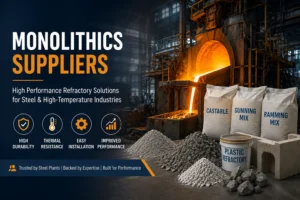
Monolithic producers are much more important than most consumers think. The metal production plants have furnaces, kilns, and ladles which require resistance to heat, wear, and sudden changes in temperature.
That is where monolithic suppliers come in. These manufacturers produce shaped refractory materials which are installed straightaway at the plant location.
According to Calderys, monolithic refractories are utilized in steel, cement, petrochemical, and waste disposal sectors. Saint-Gobain also claims that they can endure high temperatures and chemicals.
For buyers, the real challenge is not just finding any supplier. It is finding the right one. The best monolithic suppliers understand process needs, temperature conditions, and installation requirements. What this means is that the producer should assist you in choosing the correct product, not just offer you the materials.
What are monolithic refractories?
Monolithic refractory materials are also referred to as bulk or unshaped refractory materials. They are supplied in loose form and used without pre-firing or forming. As per SME Group, monolithic refractory materials consist of aggregates, fine particles, and binders. These are extensively utilized in the steel manufacturing industry.
NPTEL states that monolithic refractories form joint-free linings in steel plants. They are also replacing traditional brick linings.
That joint-free structure is important. As per Saint-Gobain, the presence of joints/minimal seams helps avoid corrosion and thermal shocks.
The cleaning process will be easy, and there will be minimal maintenance.
This is one of the biggest reasons monolithic suppliers remain relevant in modern industrial plants.
Why monolithic suppliers are important now
Modern plants want faster installation, better durability, and lower downtime. Calderys says monolithic refractories come in many forms. Plastics, ramming mixes, patching mixes, coating mixes, mortars, and insulating castables fall under this category.Some examples of such materials are low cement, ultra-low cement, fast-drying, and no cement castables. That shows a clear industry trend toward more specialized lining solutions.
This matters because high-temperature assets do not fail in the same way. Some systems need fast repair. Others need insulation. Some need abrasion resistance. Others need better thermal shock resistance. The best monolithic suppliers can match the right product to the right application.
Main types of monolithic refractories
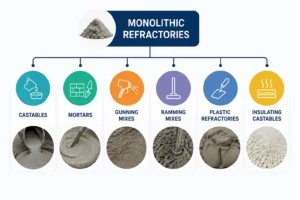
The category is broad, which is why buyer education matters. NPTEL lists castables, mortars, plastic refractories, and ramming materials as key monolithic forms. SME Group also includes gunning materials and patching mixes. The products manufactured by Saint-Gobain include castables, mortars, shotcrete, gunning mixes, and ramming mixes.
In other words, the following is what you need to know:
- The castable material will be poured or positioned in place and then solidified.
- Ramming mixes are installed by ramming the material into shape.
- Gunning mixes are used for fast repair and maintenance.
- Mortars fill gaps and help create gas-tight joints where needed.
- Plastic refractories are useful for irregular surfaces and repair work.
Each product works differently, so one material cannot fit every application. Strong monolithic refractory suppliers help buyers choose the right product and installation method.
Why insulating castables deserve special attention
Insulating castables are important in applications where heat loss must be controlled. Plibrico states that its insulating castables are suitable for backup insulation. In some moderate-temperature applications, they can also be used as primary lining materials. The company also highlights low thermal conductivity, adequate strength, and moderate density.
This is not a trivial point. Material with low thermal conductivity can prevent heat transfer and thus increase energy efficiency. Pilibrico offers service limits, heat-up procedures, and installation instructions as well.
These details are important in real plant conditions.
So, when buyers compare industrial monolithic refractories, they should not stop at product name alone. They should look at thermal performance, service limit, and curing needs too.
Where monolithic suppliers create the most value
The strongest monolithic suppliers do more than ship material. They help steel plants improve productivity, temperature control, and service longevity. Plibrico’s steel-processor material explains this clearly. It treats refractories, service, and engineering as one support model. That is a very useful model for steel buyers.
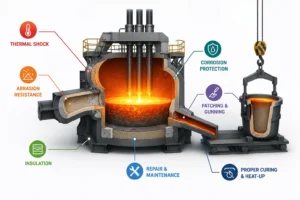
Saint-Gobain also shows how broad the application range can be. It lists furnaces, kilns, metal production, and other demanding environments as key applications. Calderys similarly points to steel, cement, petrochemical, and waste disposal industries. That is why the same supplier may need to support very different operating conditions.
How to choose the best monolithic suppliers for steel plants
If you are evaluating the best monolithic suppliers for steel plants, start with technical support, not price alone. The supplier should explain how the material will be installed, cured, and heated. They should also explain the expected service life. Plibrico’s technical library highlights the importance of technical support. It includes product categories, technical datasheets, heat-up schedules, and installation guides.
A good supplier should also offer product depth. For example, Plibrico’s technical sheets explain service limits and thermal conductivity. They also provide installation guidance for insulating castables. Saint-Gobain also pairs product pages with application notes and related product families. This kind of support helps engineers compare options more confidently.
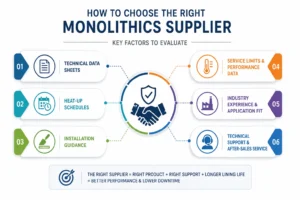
When comparing suppliers, look for these signs:
- They serve your exact industry, such as steel or foundry.
- They provide technical data sheets and installation guidance.
- They understand product selection, not just product sales.
- They can explain dry-out and heat-up needs.
- They support both repair work and new lining projects.
That is the difference between a basic seller and a true industrial partner. For steel buyers, that difference matters.
Common problems in monolithic refractory applications
Even the best material can fail if it is chosen or installed poorly. One common issue is thermal shock. According to Saint-Gobain, monolithic refractories are popular for their seamless construction since they can help to prevent corrosion and thermal shock.
That means poor product choice can create the opposite effect.
Another risk is incorrect curing or heat-up. Plibrico recommends a 24-hour moist cure for castables. It also advises controlled heating and cooling to reduce thermal stress.. That shows why installation support matters just as much as the product itself. If a lining is dried too fast or heated too aggressively, performance can suffer.
There is also the issue of application mismatch. An insulating castable may work well for backup insulation. However, it may not handle severe-duty wear zones. Plibrico makes this clear by listing service limits, density, and intended use separately. Good monolithic suppliers help buyers avoid that mistake.
What makes industrial monolithic refractories a smart choice?
The appeal of industrial monolithic refractories is simple. They are versatile and adaptable. In many cases, they are easier to install than shaped products. NPTEL explains that monolithic refractories can be installed by casting and spraying. Saint-Gobain highlights joint-free linings. Such materials do not corrode easily, nor are they sensitive to abrasion and thermal shock.
That combination explains why they remain a major part of modern refractory practice.
They also support a more flexible maintenance strategy. Fast repair mixes, gunning materials, patching products, and insulating castables let plants respond to different operational needs without rebuilding the entire lining system. This is a practical advantage for steel plants, kilns, and furnaces. These operations cannot afford long shutdowns.
FAQ
What are monolithic refractories?
Monolithic refractories are loose refractory materials. They are installed without forming them into bricks first. These materials contain aggregates, powders, and binders. These materials are extensively applied in the steel, cement, petrochemical industries, etc.
Are castables considered monolithic refractories?
Yes. NPTEL identifies castables as a key monolithic form. Saint-Gobain also includes castables in its monolithic product range. Castables are installed by casting and then hardened in place.
What are insulating castables used for?
Insulating castables are used where reducing heat loss matters. Plibrico says these materials work well for backup insulation. In less demanding applications, they can also serve as primary lining material. They are valued for low thermal conductivity, moderate density, and practical service limits.
What should I look for in the best monolithic suppliers for steel plants?
Choose suppliers that provide technical data sheets. They should also offer heat-up schedules, installation guidance, and application support. Also check if they understand steel-plant duty conditions. The wrong material or cure schedule can shorten lining life.
How Swati Global Supports Industrial Refractory Performance
Choosing the right monolithic suppliers requires more than product supply. It requires technical knowledge and application-focused support.
Swati Global supports steel and high-temperature industries with practical refractory solutions built for performance and reliability. The company understands material selection, service conditions, and installation needs that affect long-term lining life.
For industries that need dependable monolithic suppliers, Swati Global offers the technical support needed to improve performance, reduce downtime, and support stable plant operations.
Conclusion
The best monolithic suppliers do more than sell refractory material. They help plants choose the right lining system. They also support correct installation and long-term performance under real operating conditions. This is particularly the case with steel mills, where heat, wear, and downtime come at a cost.
The Calderys Group, Saint-Gobain, Plibrico Company, and NPTEL back this view.
Monolithic refractories are flexible and adaptable. They are also efficient in tough industrial environments.
If your goal is to work with the best monolithic suppliers for steel plants, focus on technical support, product fit, and installation knowledge first. Price matters, of course. However, performance, service life, and reliable support matter more over time. That is where real value begins.