

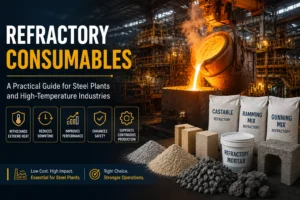
Refractory Consumables are a small part of a plant’s budget, but they have a big effect on performance. In steelmaking, refractories are used as consumables. They may need replacement after a few days or weeks.
The World Refractories Association also says one ton of steel needs about 10–15 kg of refractories. Refractory consumables for the steel industry affect plant operations. It also affects production performance. So, buyers should not see it as only a purchasing decision. Calderys describes refractories as high-temperature solutions for steel and other industries. This shows their importance in modern production.
What are Refractory Consumables?
Refractory Consumables are heat-resistant materials. They are used to line furnaces, kilns, ladles, and other high-temperature devices. A refractory is defined by Britannica as a substance that melts at an extremely high temperature. It can retain its physical integrity at high temperatures. The World Refractories Association says refractories protect furnaces and other equipment from the inside. They also help contain molten and burned materials safely. So, refractory products and consumables help plants operate under extreme heat.
These materials come in different forms. Some are shaped products, like bricks. Others are monolithic products, which are installed on site. Britannica explains that monolithics can be formed and hardened in place. The WRA says refractories are available in many forms. These include powders, bricks, custom-shaped products, and functional products. That is why industrial refractory consumables include many product types. They are not limited to one product.
Why Refractory Consumables Matter in Steel Plants
Steel plants depend on Refractory Consumables every day. WRA says refractories are used as consumables in steelmaking. They must be replaced to keep production running. It also states that refractories are essential in steel, cement, glass, metal, pulp, chemical, and waste plants. In addition, around 70% of refractories are sold to the steel industry. This shows the importance of refractory consumables for steel industry operations. They help support uptime and process stability.
The economic impact is also important. The WRA says refractory products usually account for less than 3% of production cost. In some applications, the cost is even below 1%.
However, the WRA also says better design and smarter use can improve production costs by up to 20%. In other words, Refractory Consumables are low-cost items with high operational impact. Therefore, the right choice can reduce losses, improve safety, and support smoother production.
Main Types of Refractory Products and Consumables
One size doesn’t fit all when it comes to products for different jobs. That is why refractory products and consumables should match the application and temperature. Wear level and installation method also matter. According to Britannica, clay refractories consist of fireclay, high-alumina, and mullite products. Britannica further states that non-clay refractories consist of silica, silicon carbide, and zircon products.
However, monolithic products have the ability to be put into place.
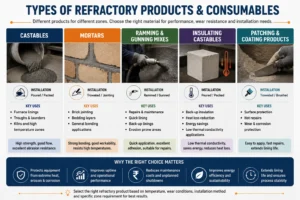
Here are the main forms of Refractory Consumables used in industry:
- Castables are poured or packed into place and then hardened. They are common in many furnace and lining jobs.
- Mortars help bond brick joints and support lining work. Britannica lists mortars as a monolithic form used on-site.
- Ramming and gunning mixes are used for repairs, maintenance, and quick lining work. Britannica and RHI Magnesita both describe these as important monolithic solutions.
- Insulating castables help reduce heat loss and support energy efficiency. Calderys includes insulating castables in its monolithic product range.
- Patching and coating products are useful for quick repairs. Calderys also lists these as part of its refractory solutions.
This is where industrial refractory consumables become very practical. Different plant zones need different performance levels. So, the material should match the application.
Raw Materials Behind Refractory Consumables
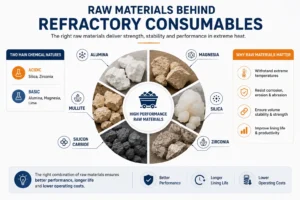
The raw materials used in Refractory Consumables are also important. Britannica says refractories can be acidic or basic. Acidic materials include silica and zirconia. The basic ingredients are alumina, lime, and magnesia. It also mentions that high-alumina refractories are produced using bauxite and kaolinitic clays. The percentage of alumina may vary from 50 percent to 87.5 percent.
That mix of raw materials changes performance. For example, Britannica says high-alumina refractories perform better than fireclay refractories at high temperatures. They also perform better in basic environments. It also says they offer better volume stability and abrasion resistance. So, buyers should compare the raw materials used by refractory consumables suppliers. They should also check if the material fits the process.
What Are the Examples of Highly Refractory Materials?
Some of the most commonly known highly refractory materials are alumina, magnesia, silica, zirconia, silicon carbide, and mullite. Britannica identifies these as major refractory families. It also notes that mullite has a melting point of about 1,850°C and offers excellent resistance to high-temperature loading. That makes it a strong example of a material used in harsh industrial environments.
RHI Magnesita’s steel-ladle material also shows how these materials are used in actual plants. It highlights high thermal shock resistance and low thermal conductivity. It also offers better corrosion resistance and quick drying on-site.
These are important features in refractory consumables for steel plants.
How to Choose the Best Refractory Consumables Suppliers
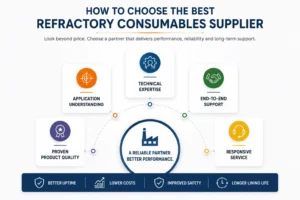
The best refractory consumables suppliers do more than sell material. They help with selection, engineering, installation, dry-out, commissioning, maintenance, and technical support. Calderys says its service model includes material selection and engineering support. It also includes installation, dry-out, commissioning, maintenance, assessments, project management, and technical support. That is the standard buyers should look for.
This matters because bad installation or poor dry-out can hurt performance. A recent Calderys release says furnace dry-out is a major challenge. It can stop operations for several days.
The company also says its Fast Dry range helps reduce downtime. It also improves reliability and process efficiency. That is a clear sign of where the market is moving now. Speed, reliability, and energy use are becoming more important in industrial refractory consumables.
When you evaluate suppliers, ask these questions:
- Do they understand the exact application?
- Do they offer technical support, not just product sales?
- Can they explain the dry-out and installation steps?
- Do they provide products for the full life cycle?
- Do they support steel, cement, or other high-temperature sectors?
Those questions help separate a supplier from a real partner. They also help you choose refractory consumables for steel industry use with more confidence.
Why the Market Is Changing
The market for Refractory Consumables is shifting toward better performance and faster turnaround. Calderys says modern high-temperature solutions should support customer needs safely. The company also focuses on environmental responsibility.
It provides products and services for iron and steel plants. These industries also benefit from the use of refractories. That shows how broad the need has become.
RHI Magnesita’s ladle solutions also reflect this direction. Its steel-ladle portfolio includes products with high thermal shock resistance and corrosion resistance. These products also support easy drying on-site. Those are practical features, not marketing extras. For plants that need fewer shutdowns and better lining life, this is the kind of performance that matters most.
People Also Ask:
1. What are the refractory materials?
Refractory materials can withstand very high temperatures. They keep their shape and strength under heat. These materials serve as lining materials for furnaces, kilns, and other high-temperature devices.
2. What does refractory mean?
The term ‘refractory’ refers to high-melting or heat-resistant. In industry, it refers to materials that can survive extreme heat without failing.
3. What are the raw materials for refractories?
Silica, zirconia, alumina, lime, magnesia, and bauxite are some of the common raw materials. Some other types of refractories include silicon carbide and mullite
4. What are the examples of highly refractory materials?
Such ceramics include alumina, magnesia, silica, zirconia, silicon carbide, and mullite. Such materials are essential where thermal resistance, mechanical strength, and stability are required.
Why Swati Global is Relevant for Refractory Consumables
Swati Global supplies refractories, furnace parts, and industrial solutions for high-temperature industries. Steel plants depend on reliable Refractory Consumables. This makes the company relevant for the industry.
The company focuses on refractory products and industrial support. This matches the growing demand for reliable refractory consumables for steel industry applications.
Conclusion
Refractory Consumables are not just materials. They are part of the operating system of a steel plant. They protect furnaces, support safety, and help keep production moving. They also affect energy use, downtime, and maintenance costs. The best refractory consumables suppliers offer technical knowledge and practical support.
Choose refractory consumables for steel industry applications based on fit and performance. Supplier support is also important. The most cost-effective solution does not necessarily mean the most appropriate one. The most appropriate solution would be the one that maintains the operation of the plant safely and stably. That is where real value begins.